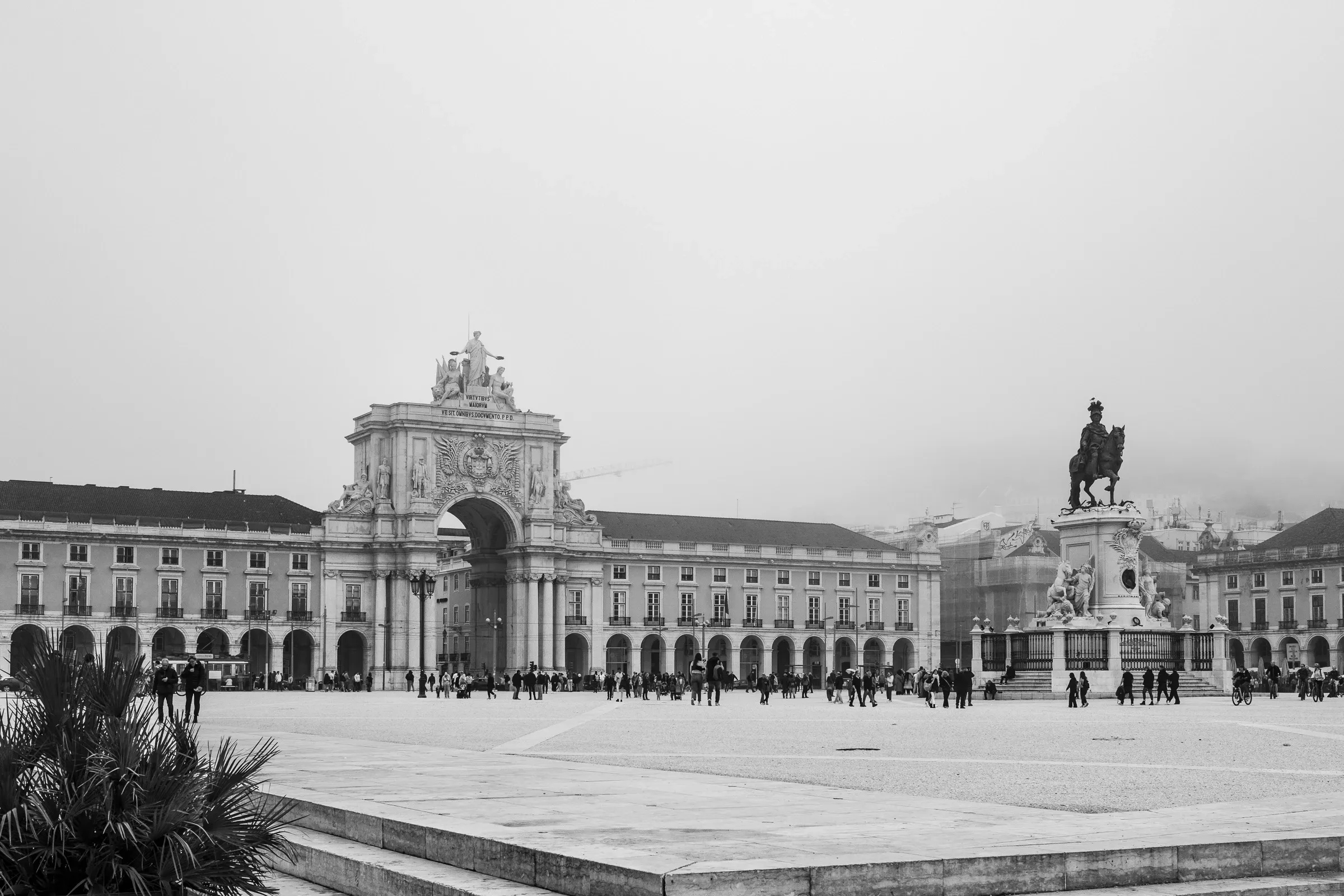
Lisbon is a city you do on foot, even though it sits on seven hills. Every neighbourhood has its own face: the alleys of Alfama, the straight streets of the Baixa, the nightlife around Bairro Alto and Pink Street, and on the edge of the city Belém with the Mosteiro dos Jerónimos and the Torre de Belém. Along the way you keep running into yellow trams squeezing through streets that were never meant for trams, and every few hundred metres there's a miradouro to catch your breath and look out over the rooftops towards the Tagus. February turned out to be a good month: pleasant temperatures, fewer crowds than in summer and the occasional fog that made Praça do Comércio half disappear. Not the weather you hope for, but the weather that gives a series character.
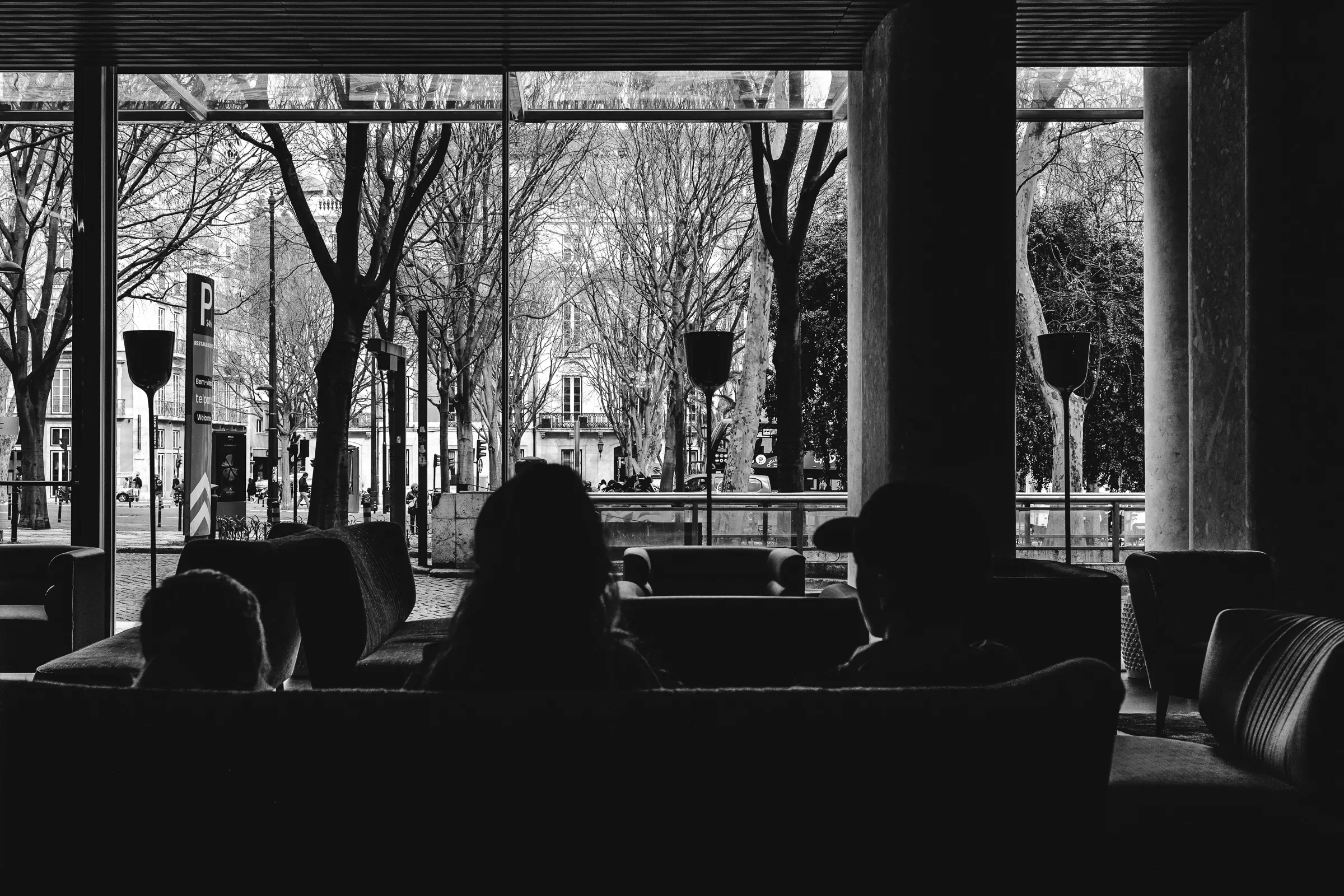
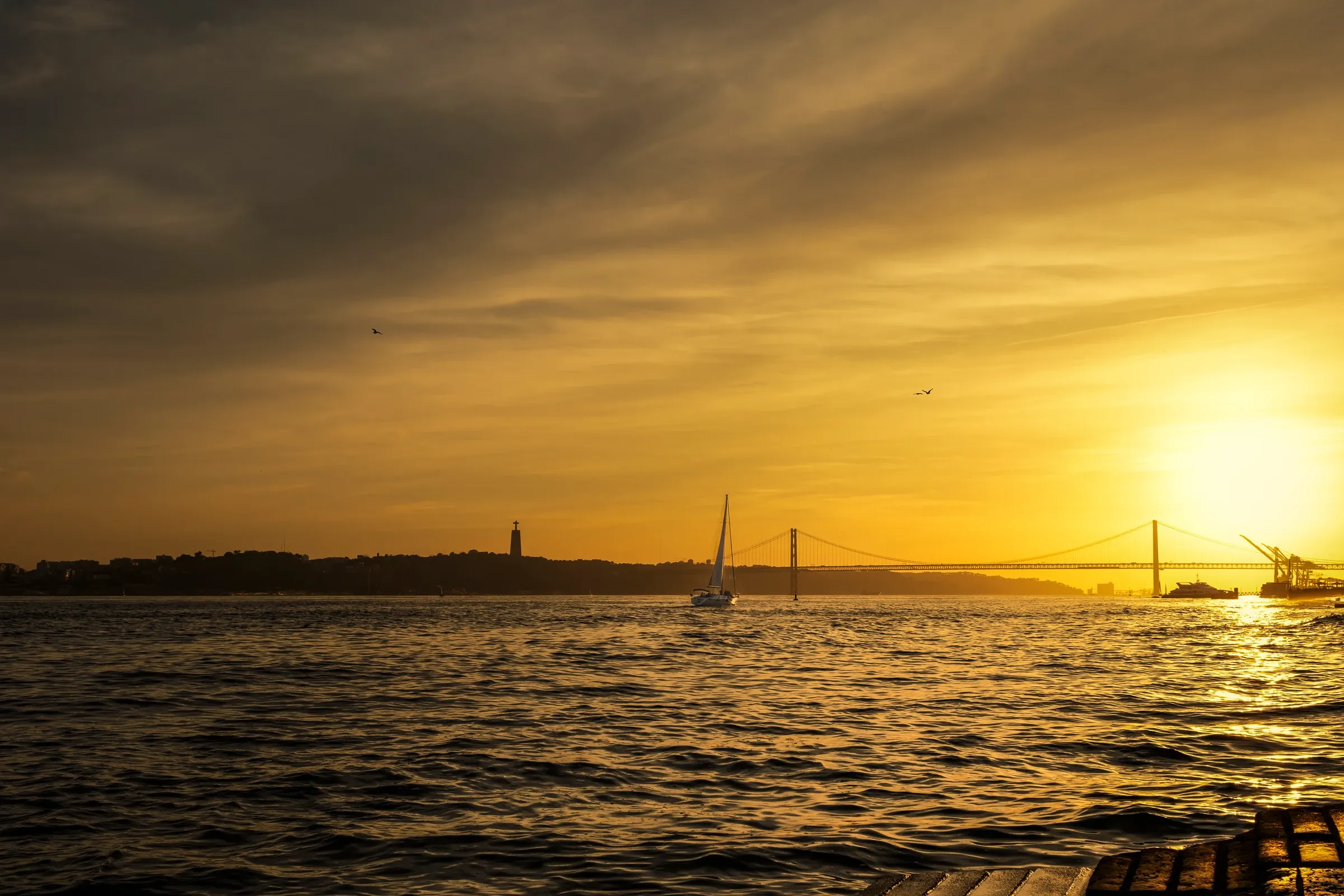
We spent a midweek at the BessaHotel Liberdade, right in the city centre and an exceptionally good stay. From there you can walk to almost everything. The advantage of February is the short days: the sun sets early, so you catch the evening light before dinner. That's how the photo at Cais das Colunas came about — the steps down to the Tagus at Praça do Comércio: a sailing boat on the water, the Ponte 25 de Abril and the Cristo Rei statue as silhouettes against the light. And dinner itself? In the city of bacalhau we ended up at an Italian place — M'arrecreo, recommended.
The preparation went as always: mark spots in Google Maps beforehand and look at what other photographers made there. Then you know where to be and roughly what image is there to get. The second part of the plan — heading out early for the best light and the fewest people — never happened. The bed was too comfortable and so was the breakfast. So you work with what you have: the X-T5 with the 23mm and the 35mm in the bag, and just start walking.
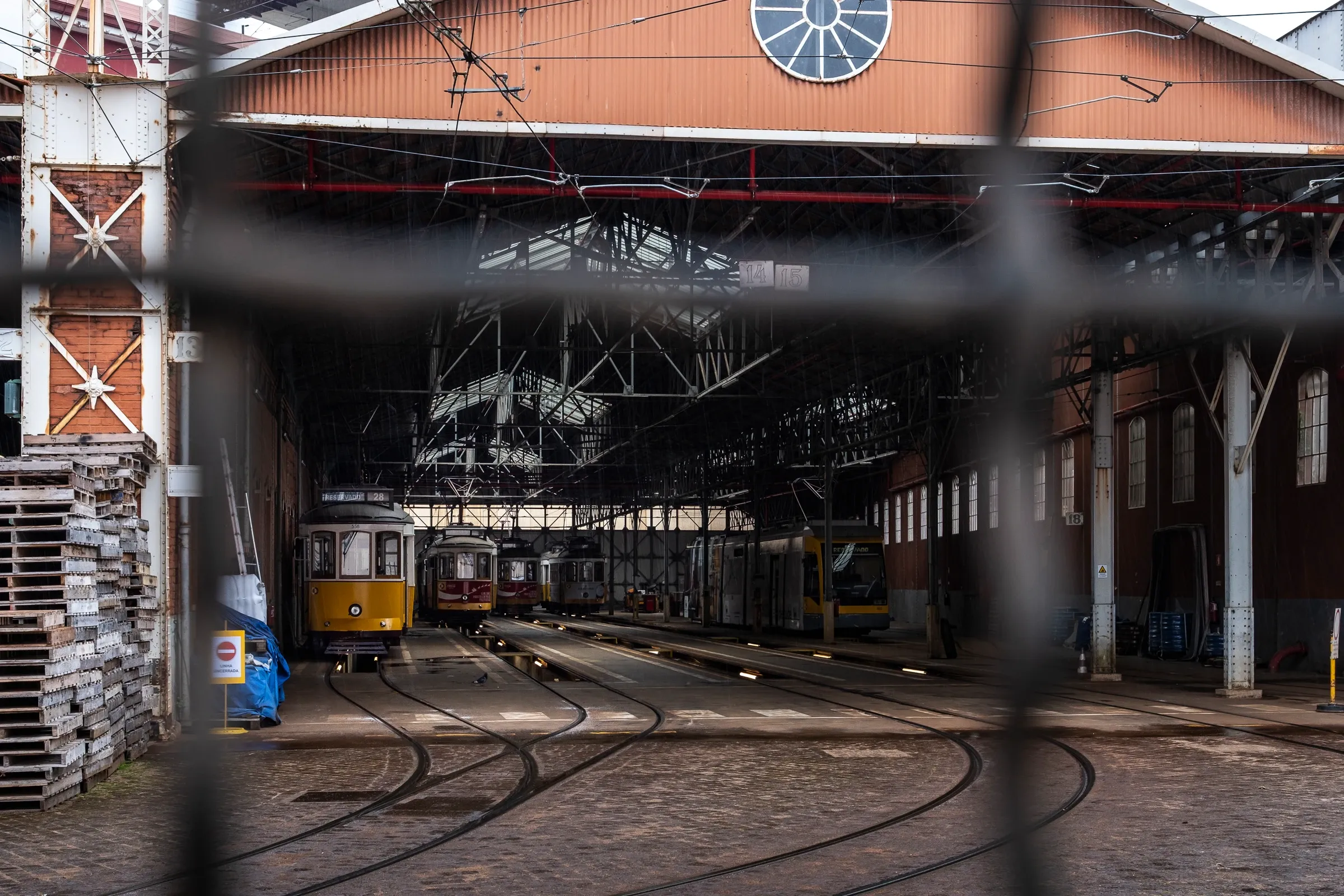
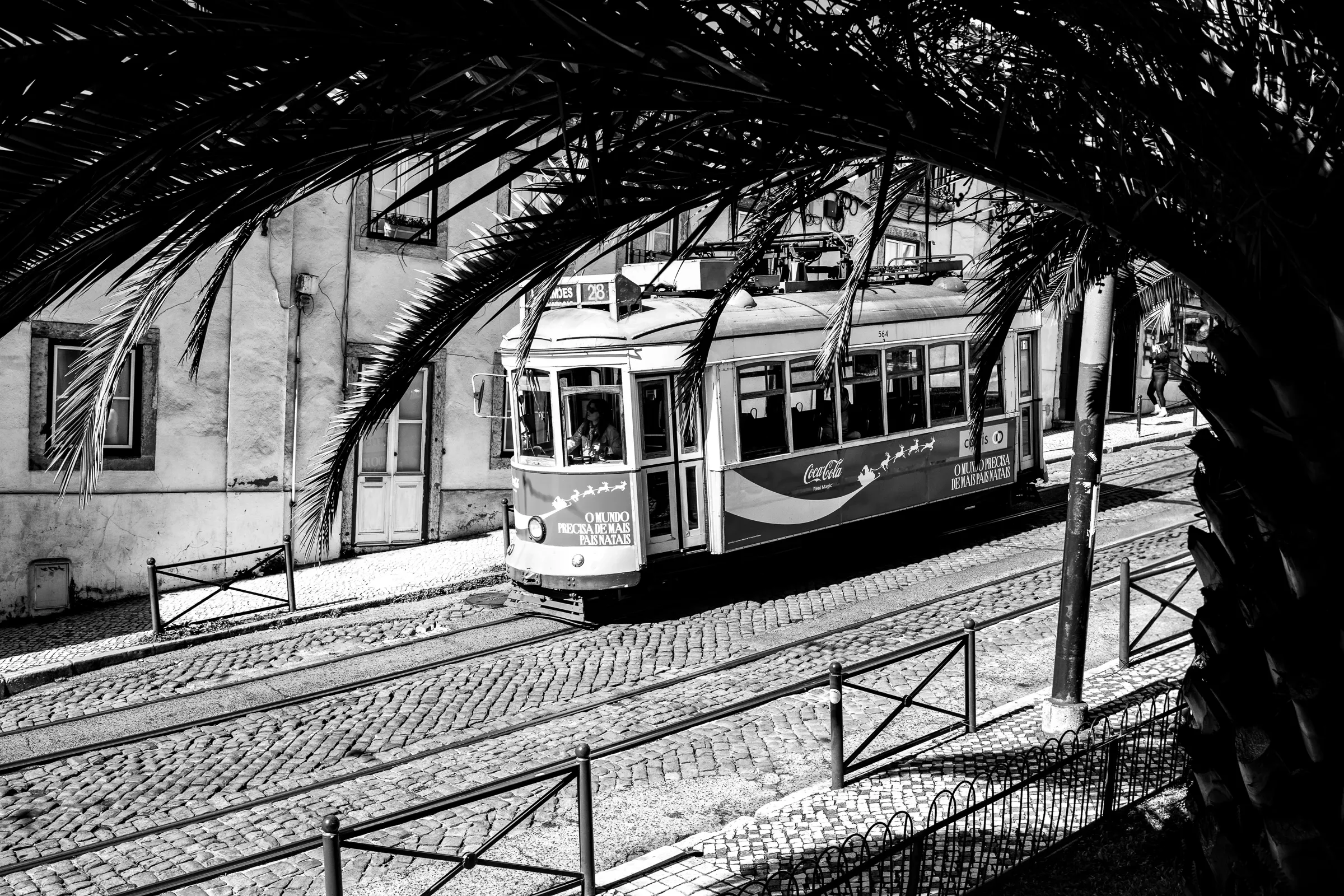
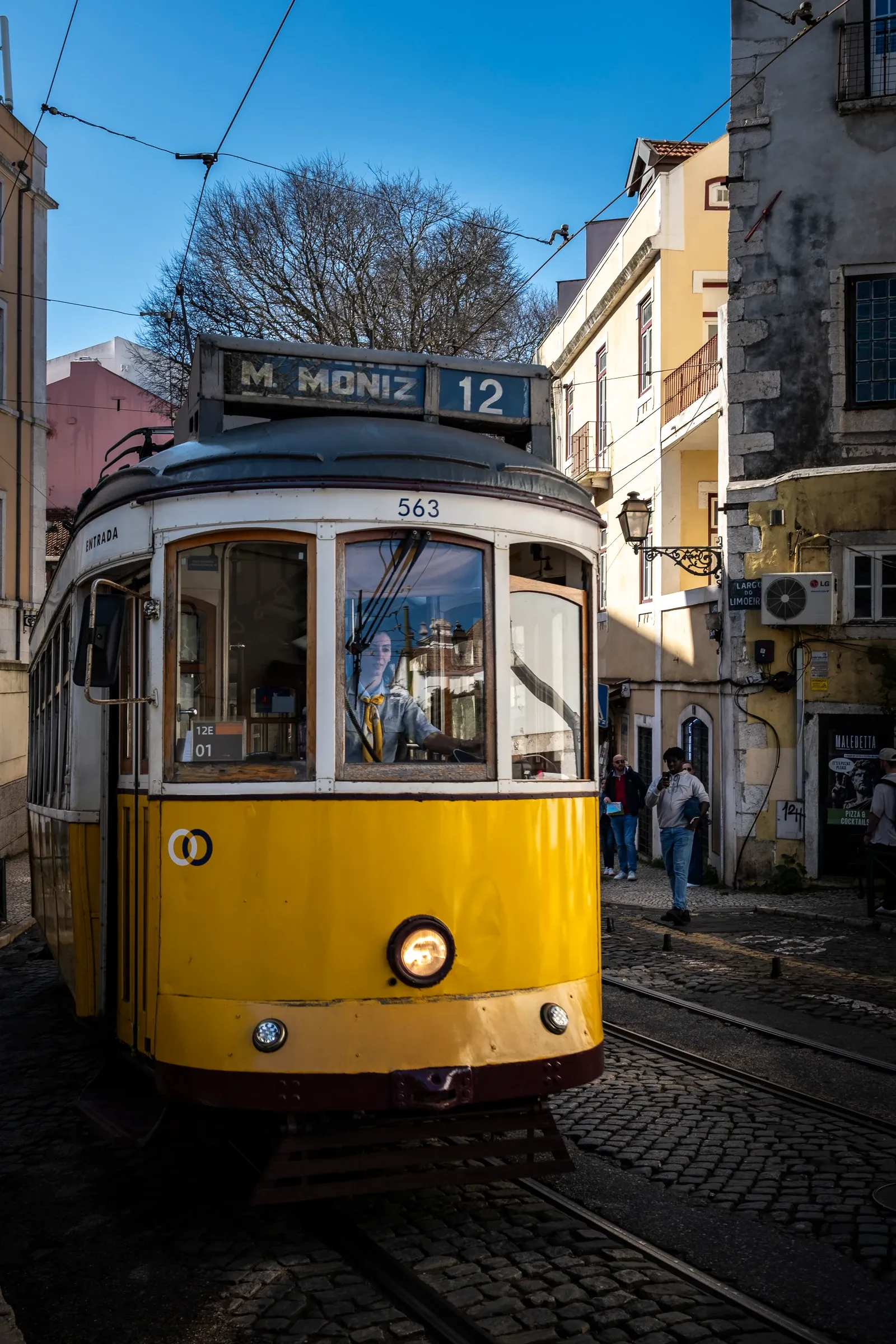
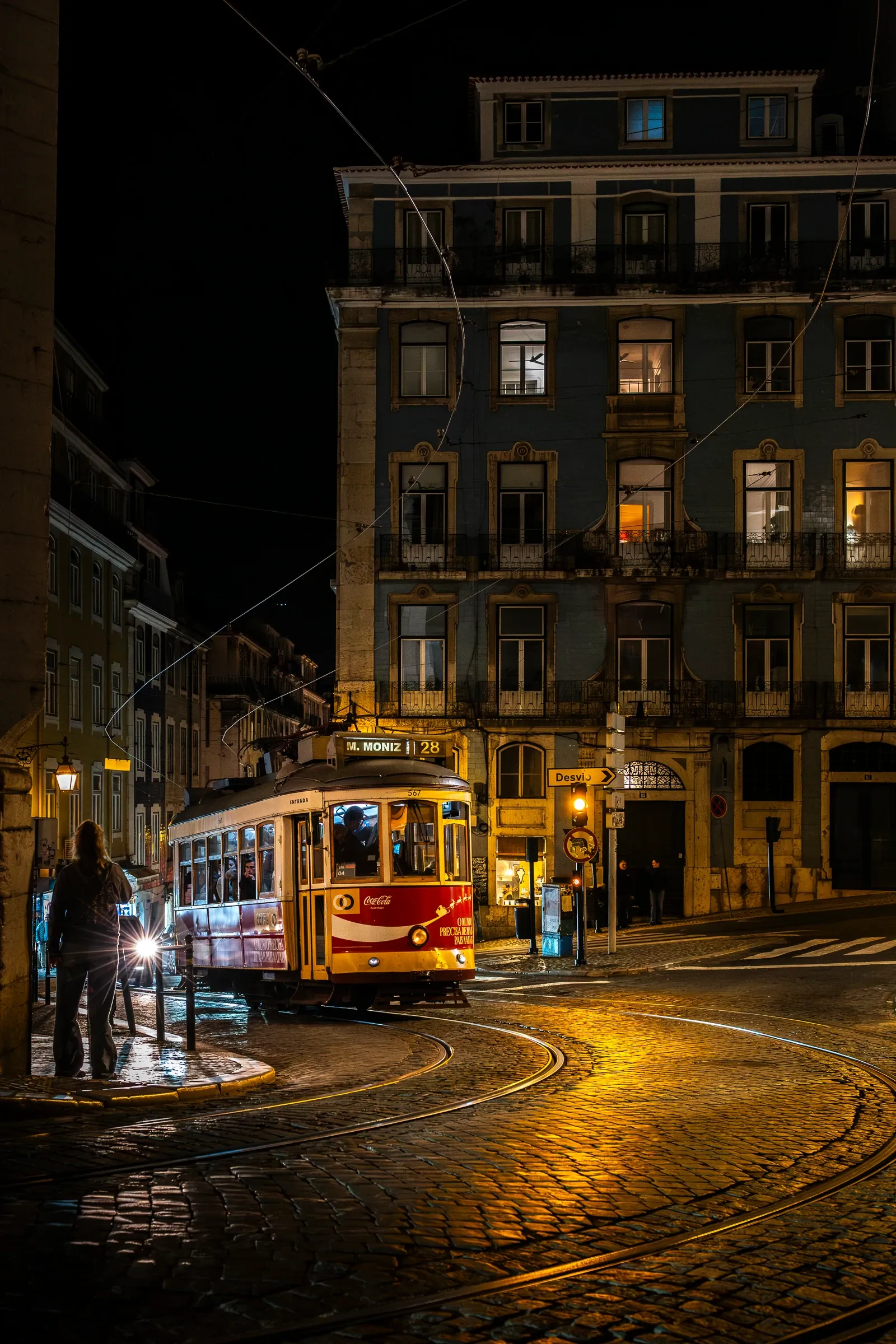
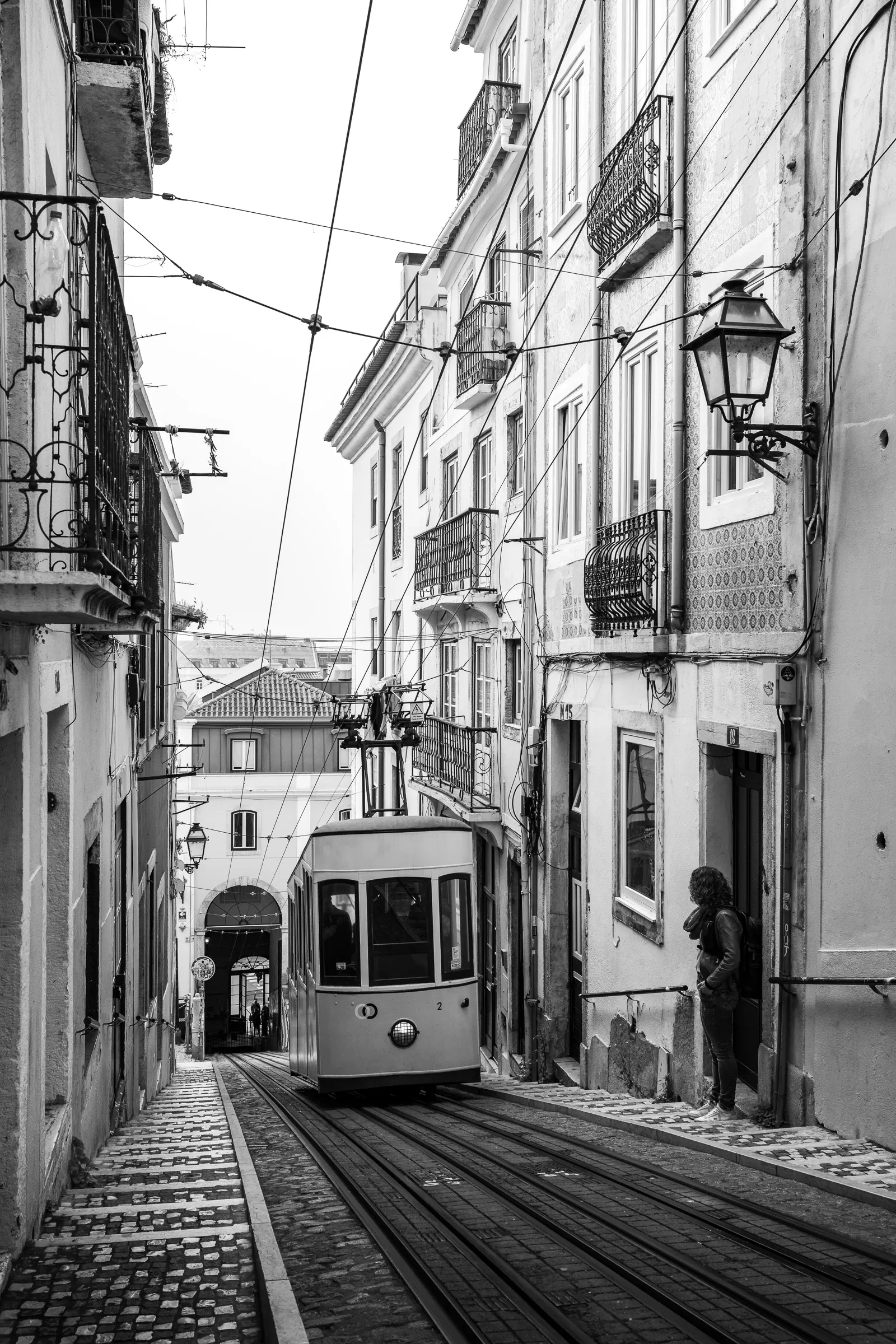
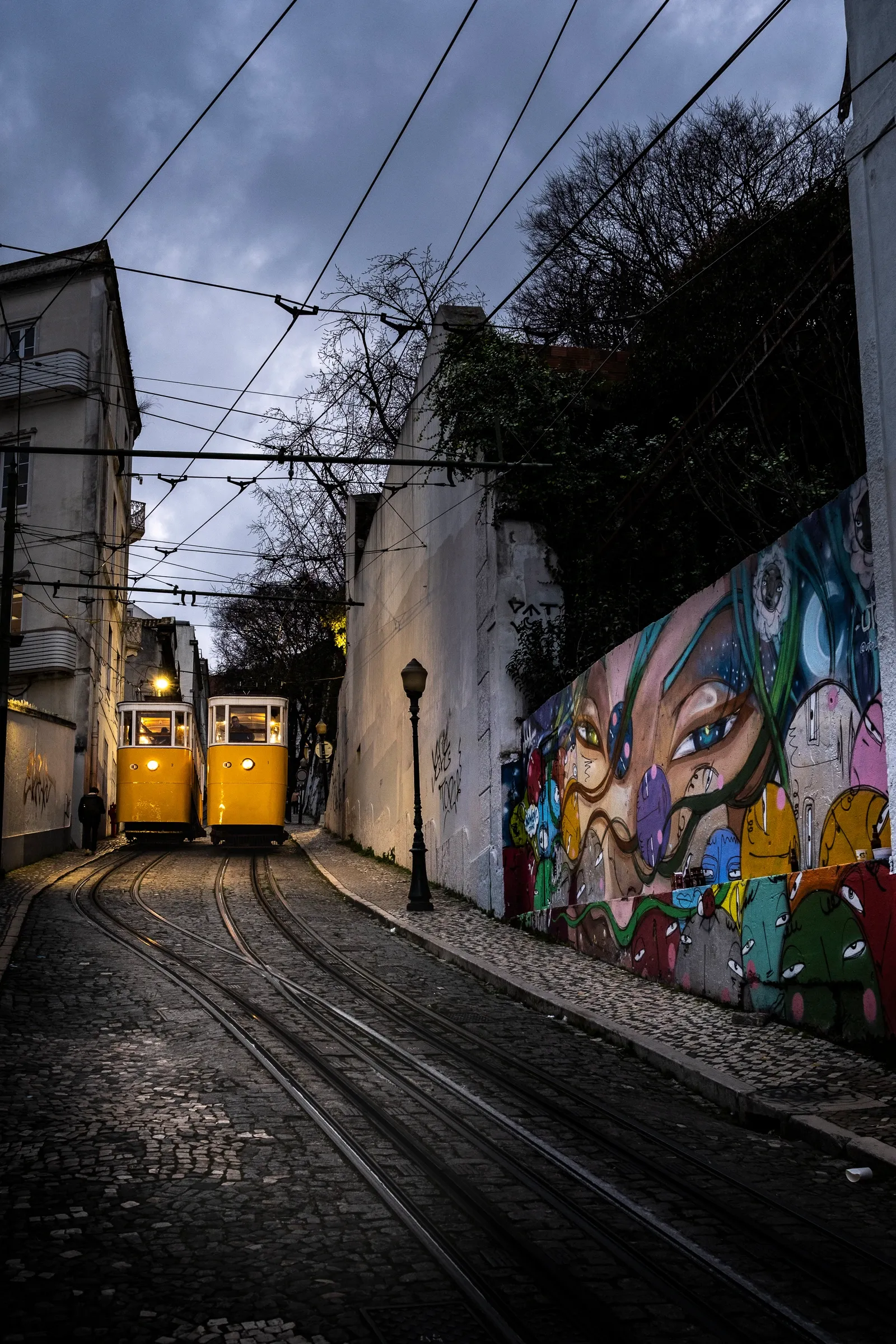
The trams naturally took the leading role in the series. The Bica funicular in its narrow street, tram 28 rounding a corner in Alfama in the evening while the cobblestones reflect the street lights, and the yellow 12 with the driver behind the window at Largo do Limoeiro. The Glória funicular is in there too, at dusk with the graffiti wall beside it. That funicular derailed in September that year, a few hundred metres from our hotel. When we photographed it in February, it was still running up and down as usual.
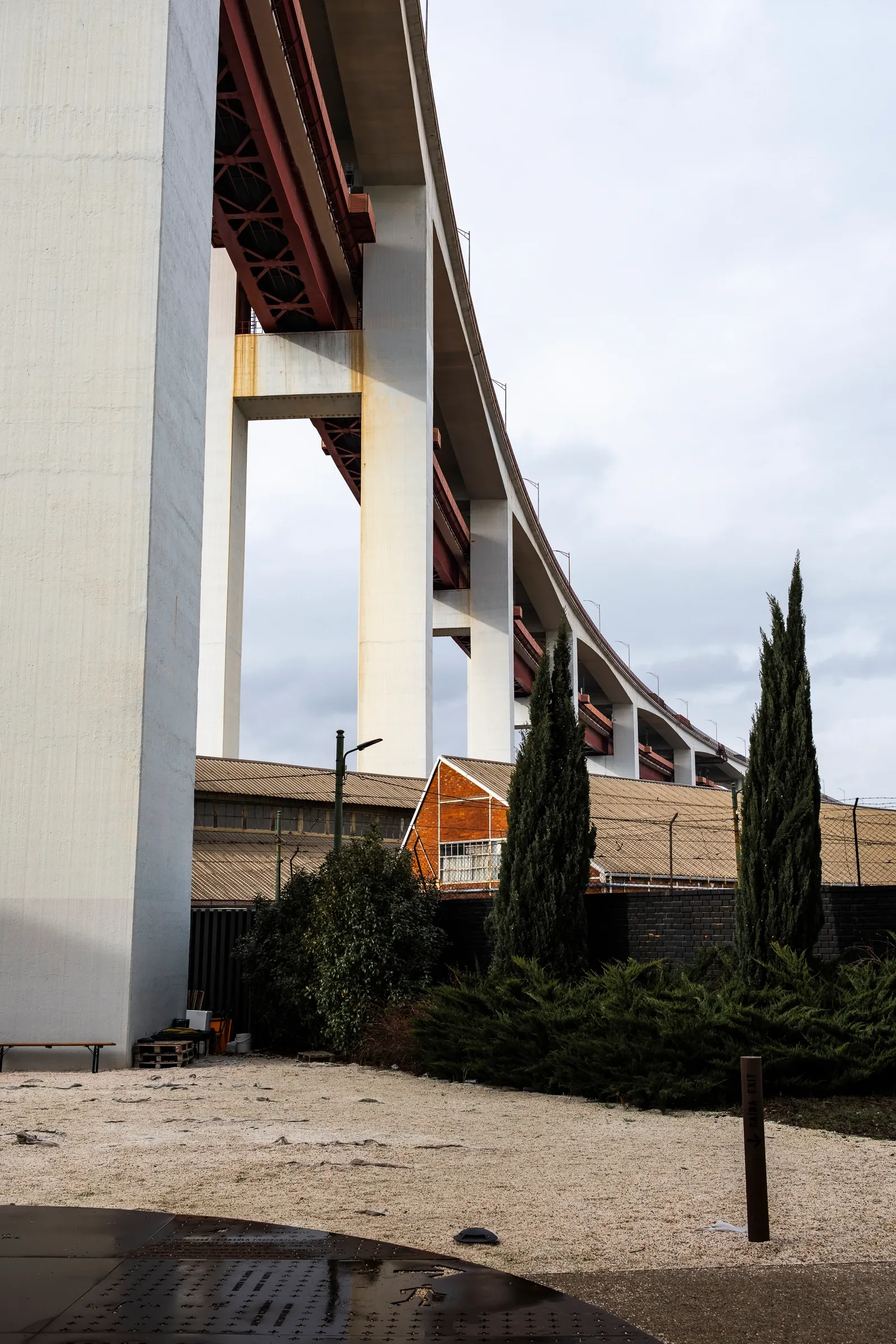
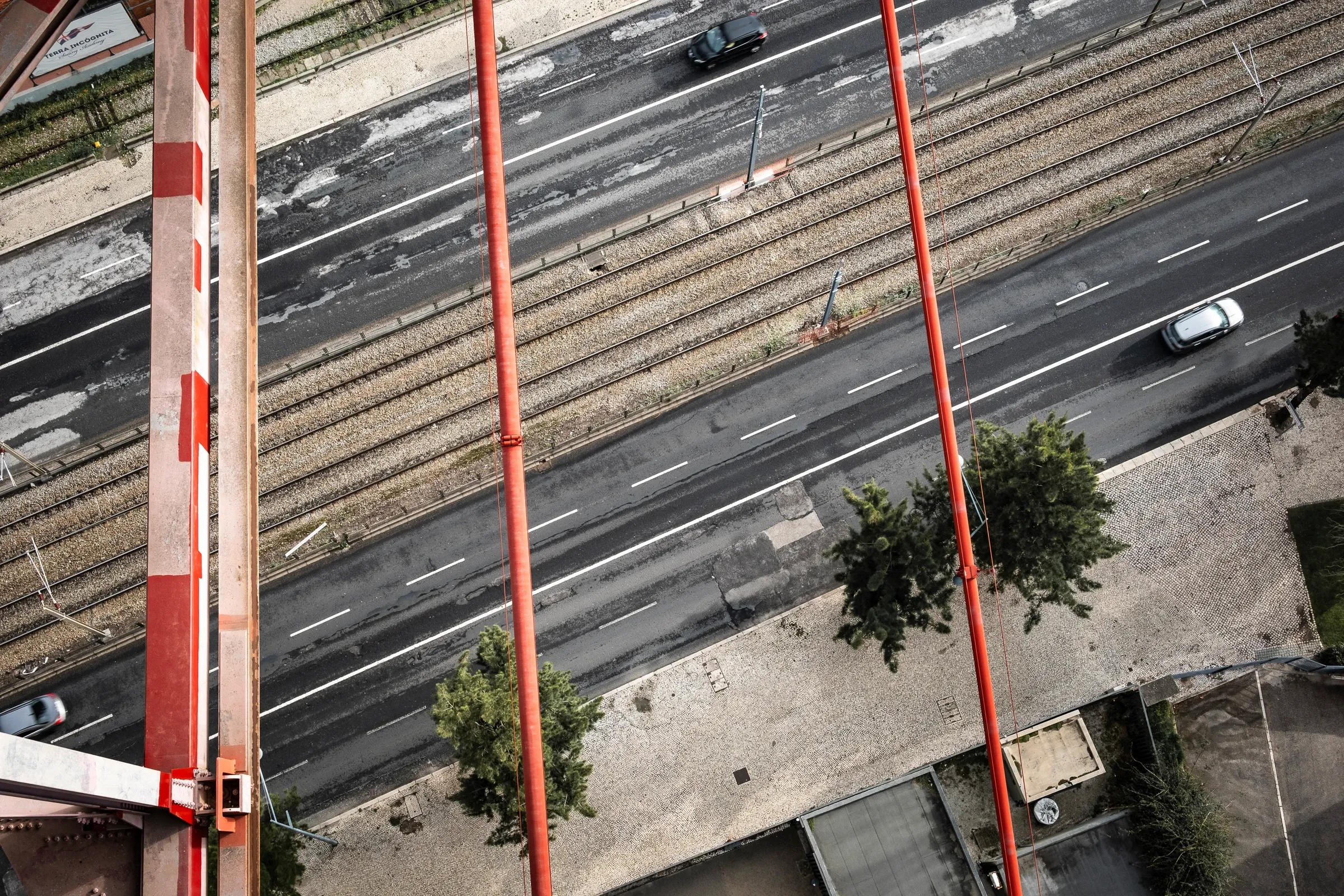
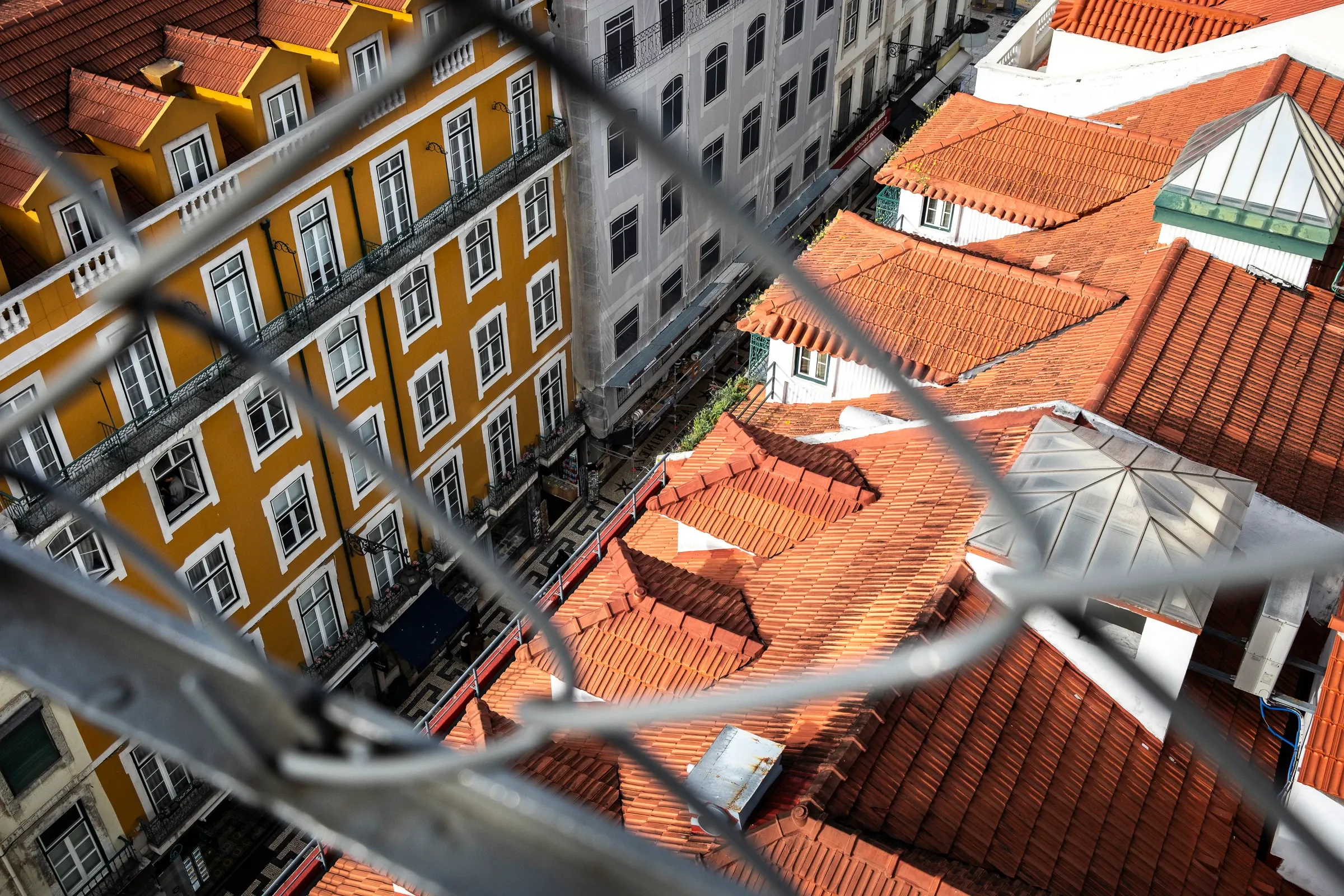
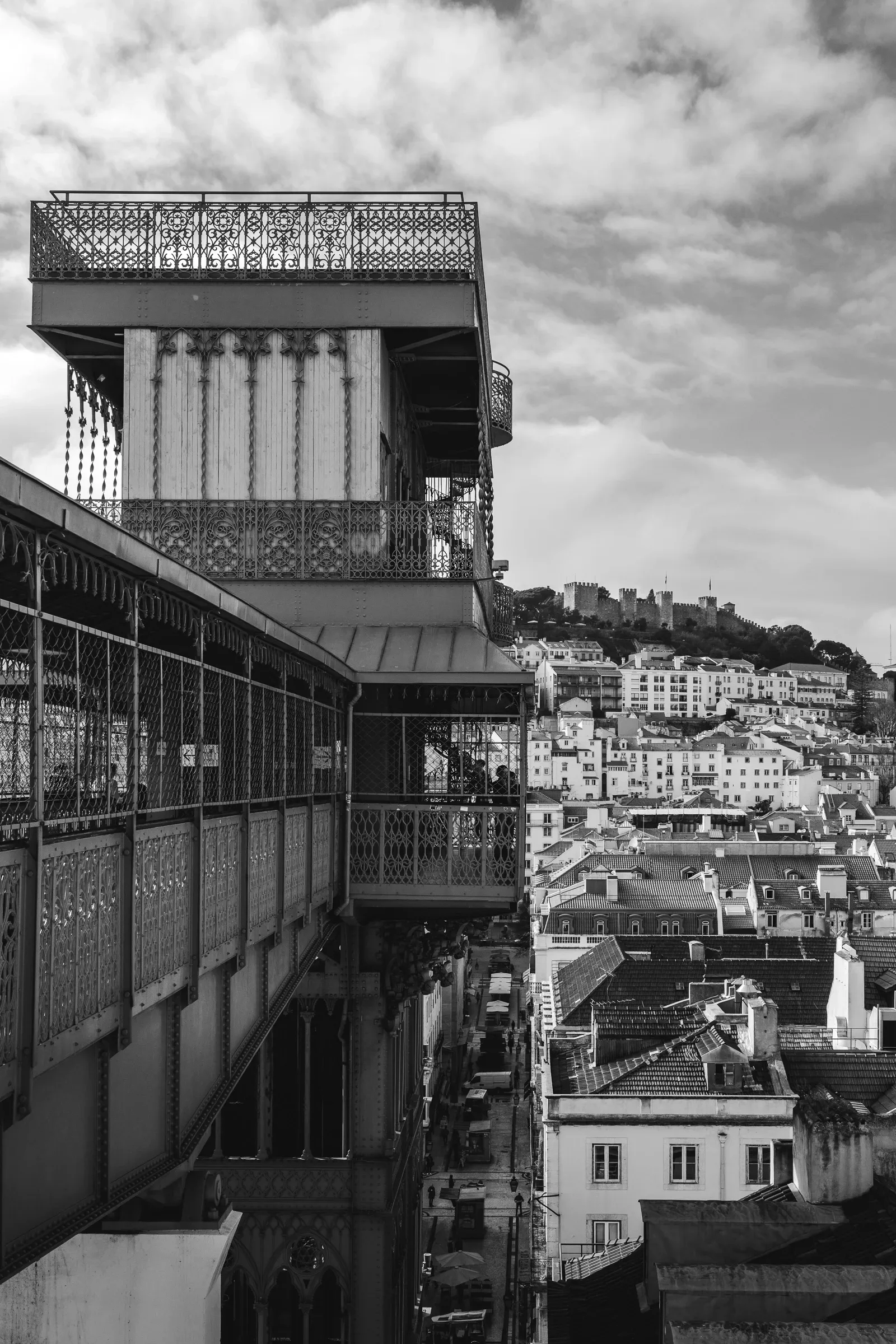
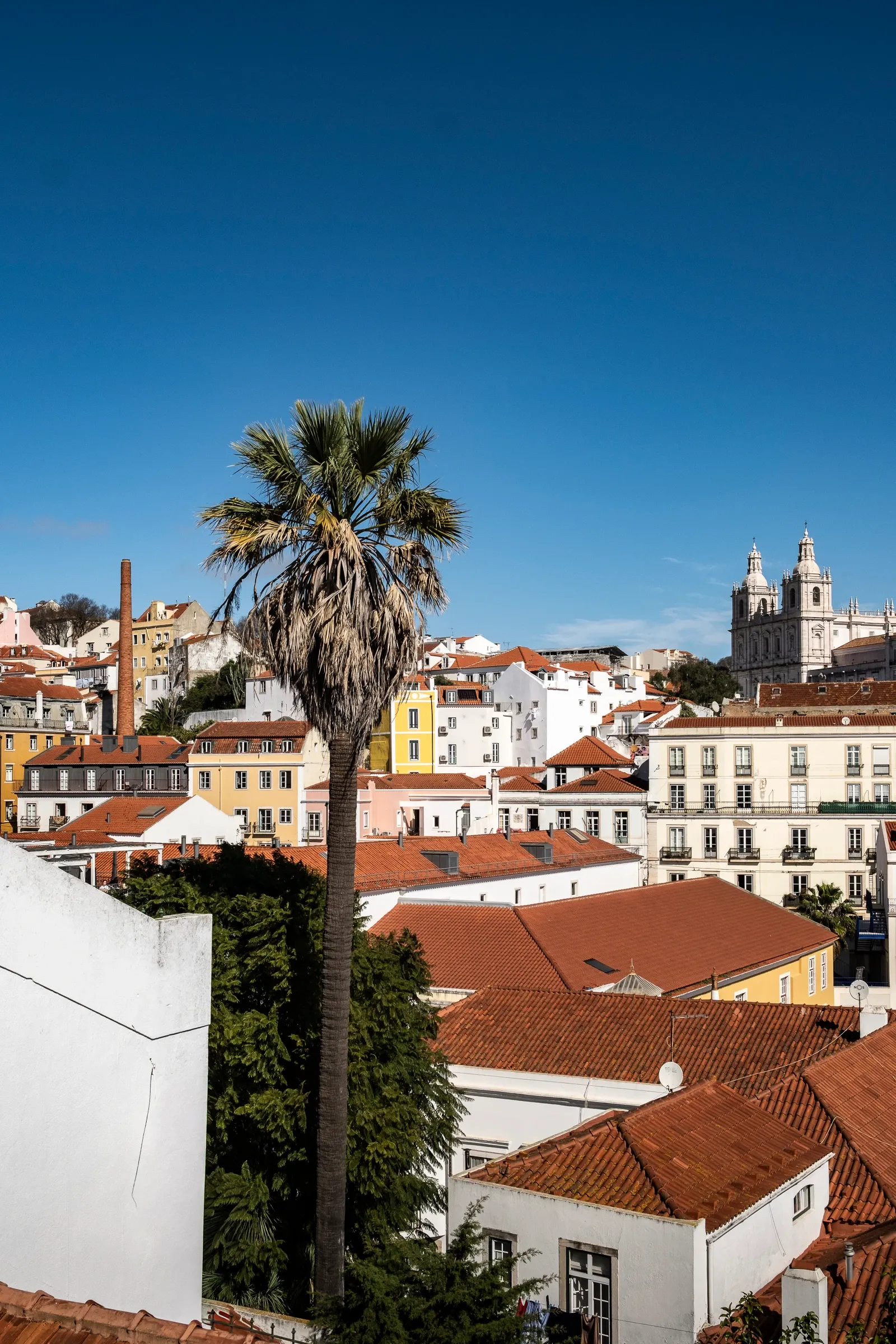
For the views, you have to climb. The Miradouro das Portas do Sol gives the classic picture across the rooftops of Alfama towards the São Vicente monastery, the Santa Justa lift looks out over the Castelo de São Jorge — and down through the fence onto the rooftops of the Baixa, which makes for its own kind of photo. The highest point was Pilar 7: a lift takes you up one of the pillars of the Ponte 25 de Abril and you look straight down onto the road and the railway. Not recommended if you have a fear of heights, recommended if you want a different viewing angle.
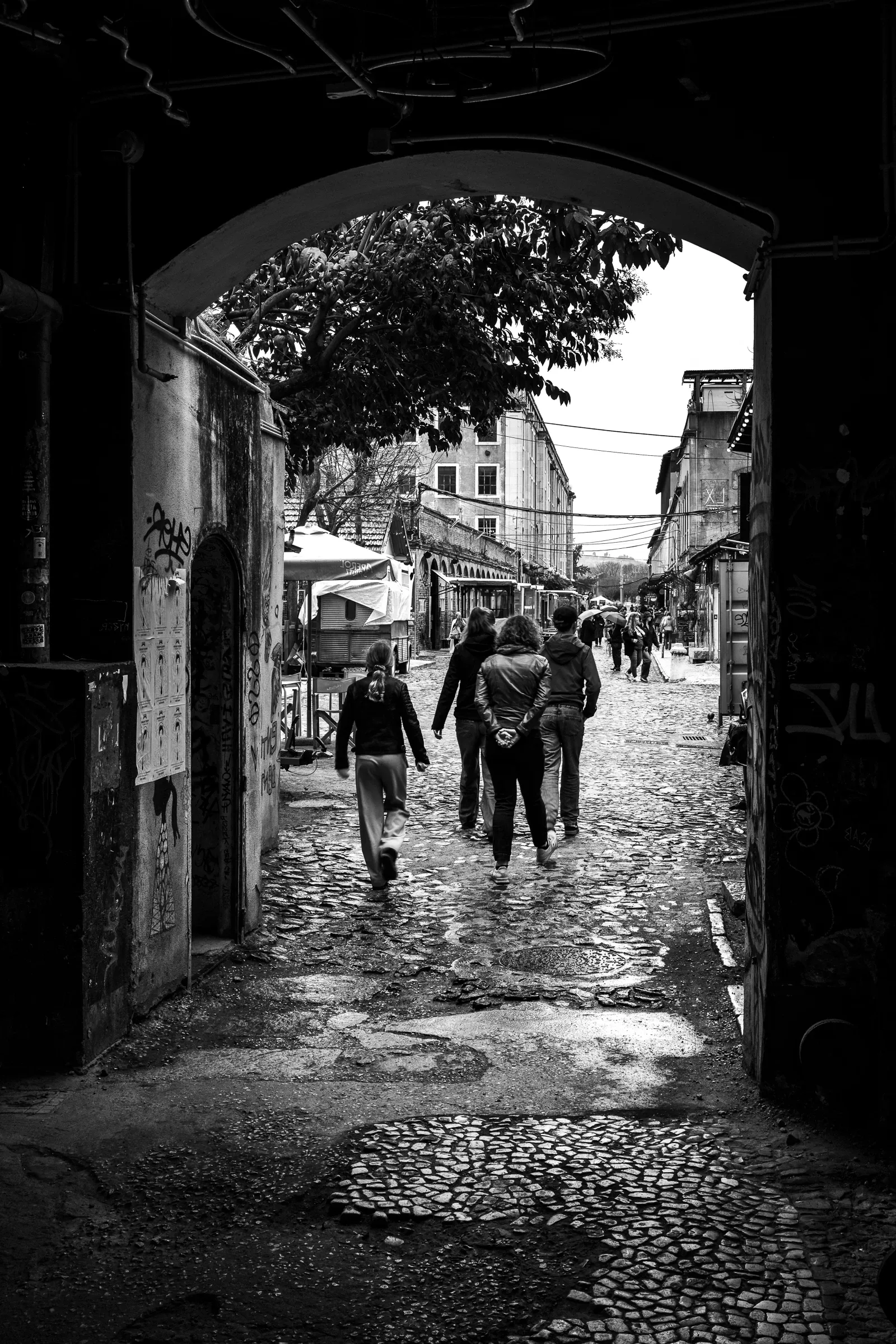
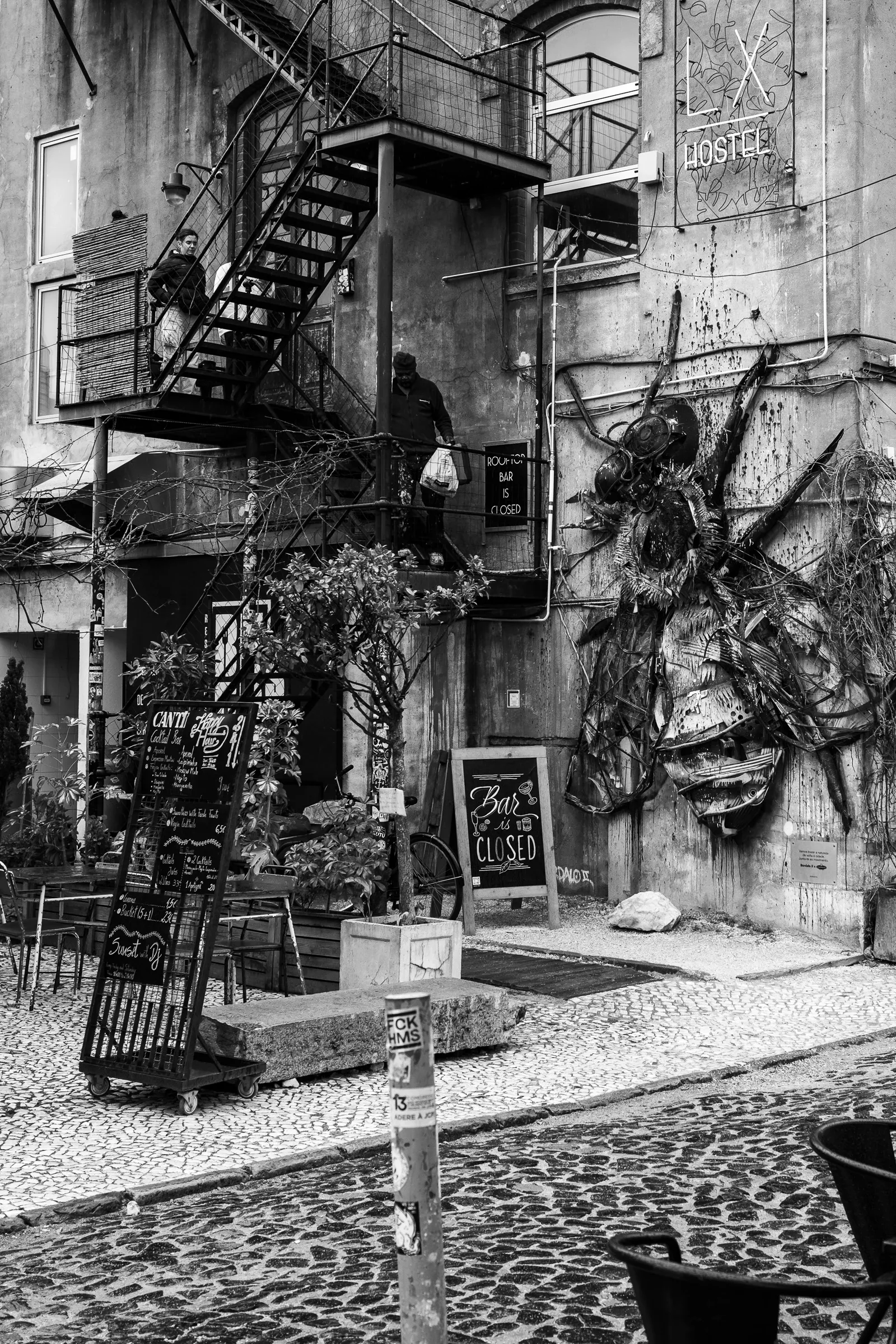
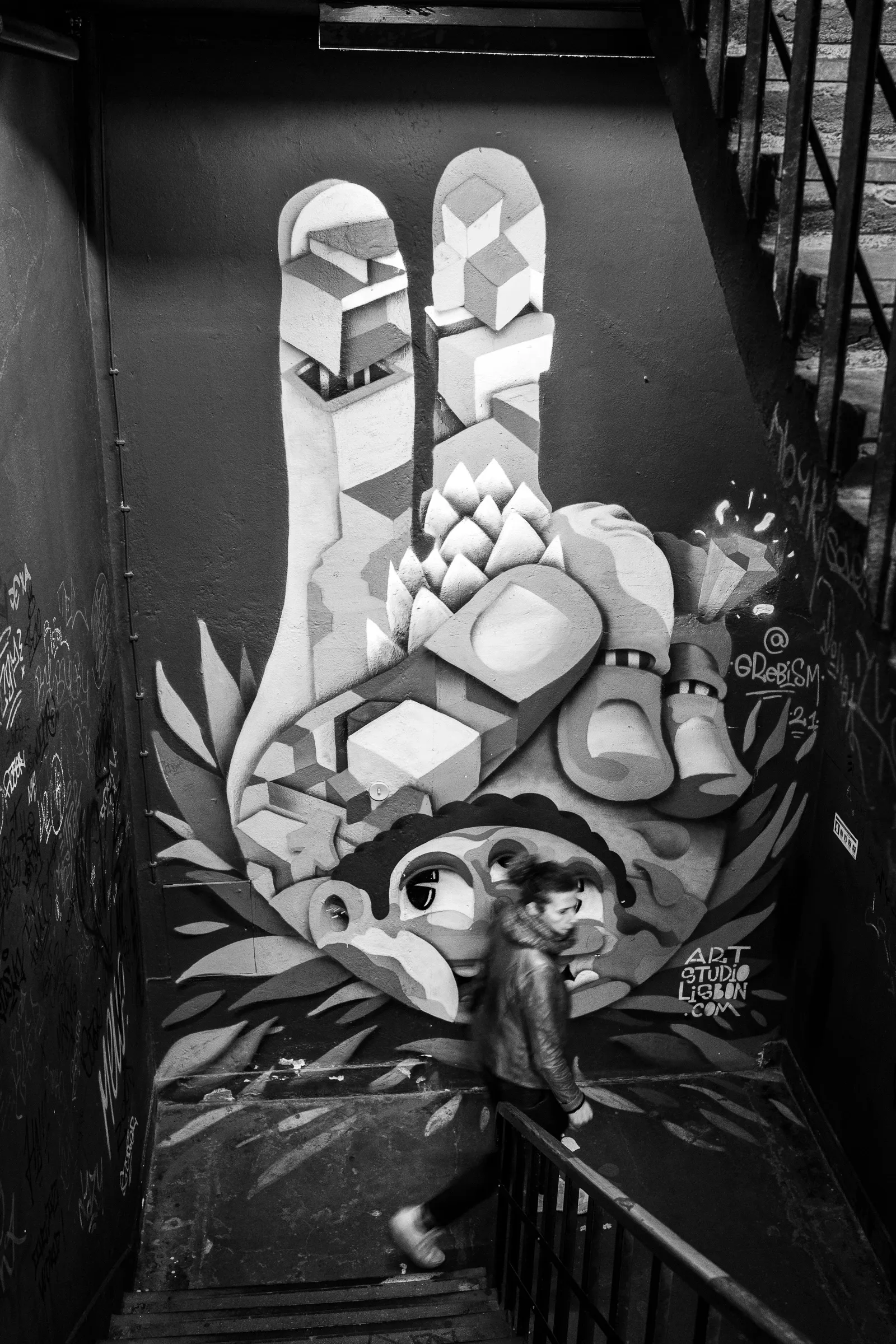
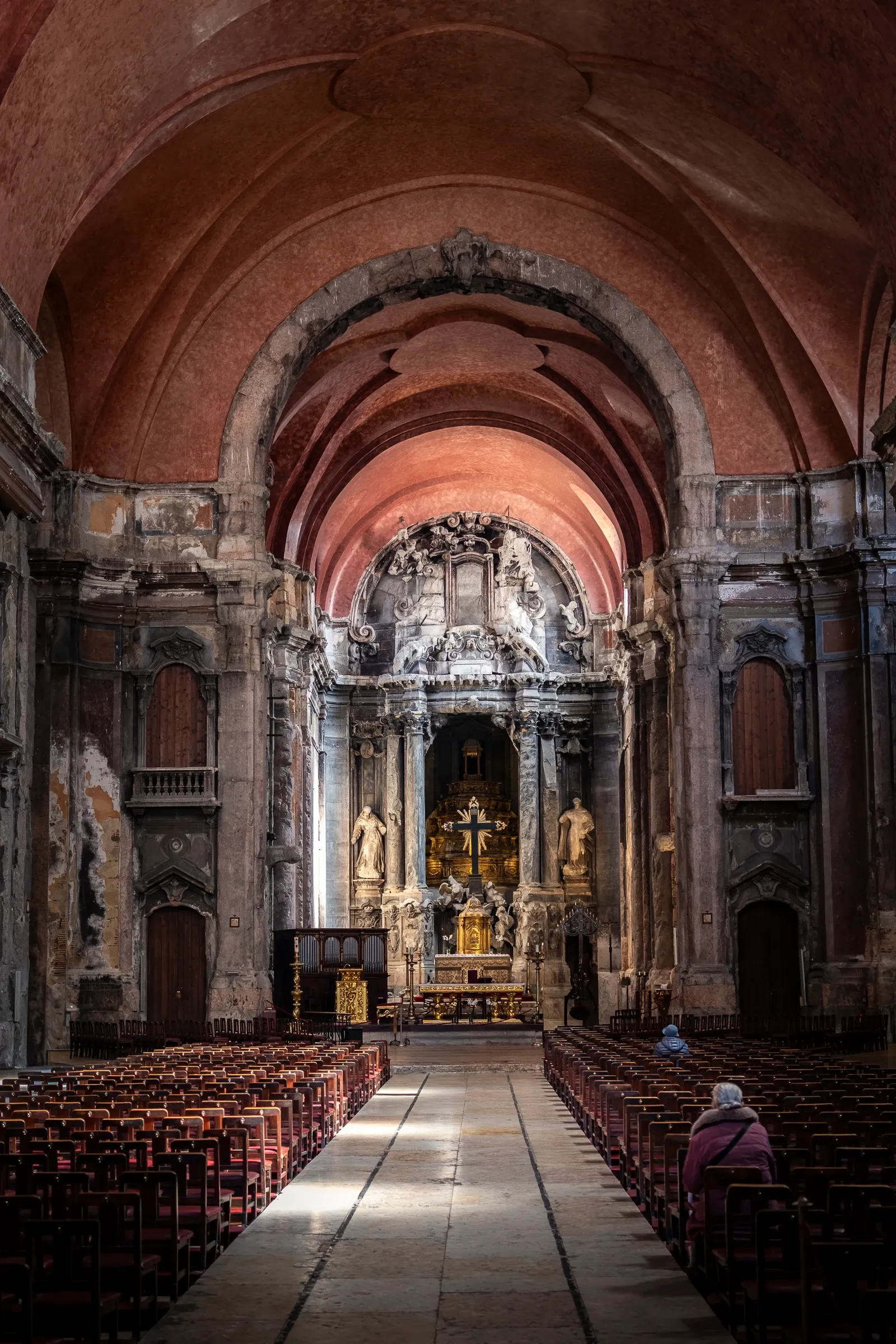
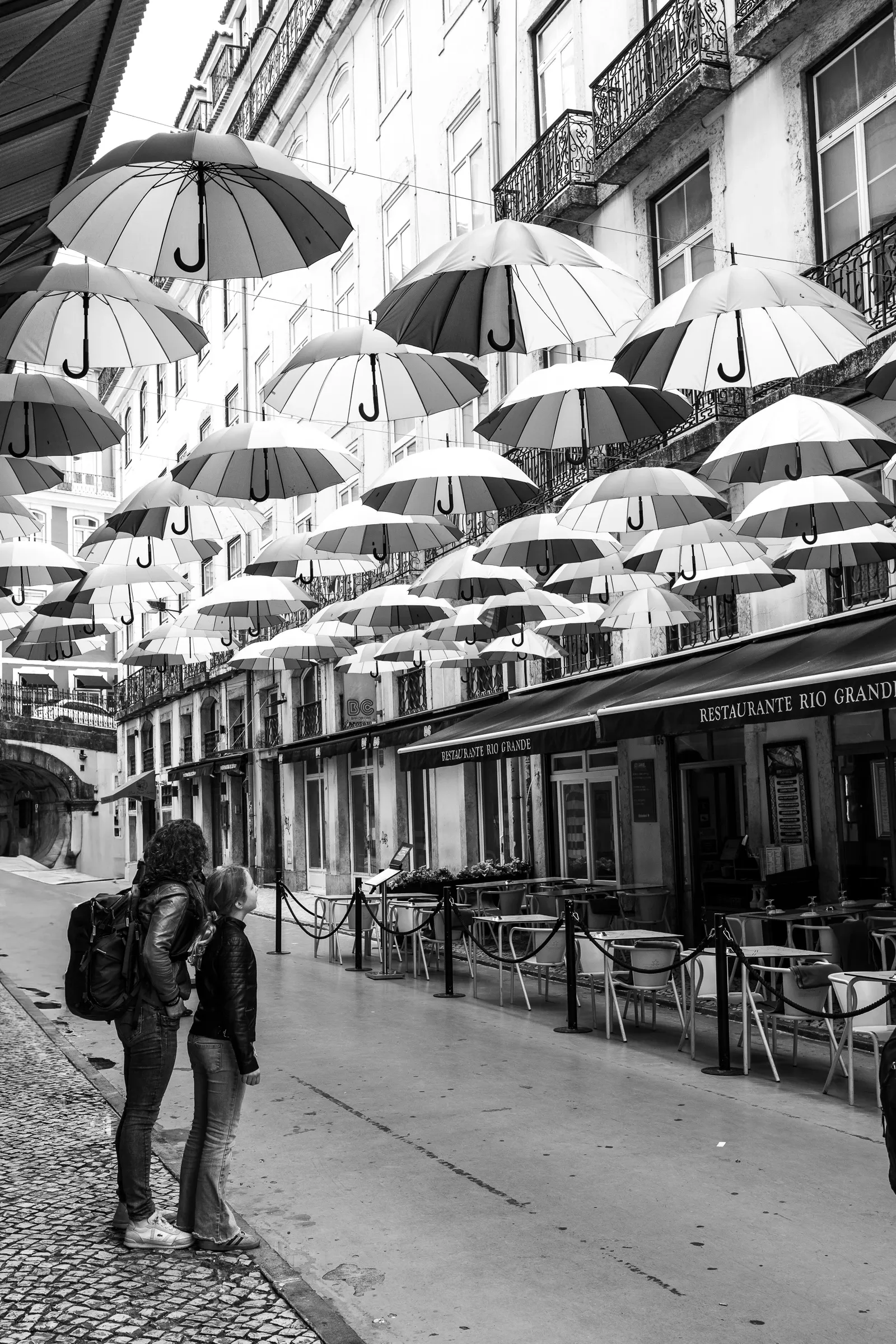
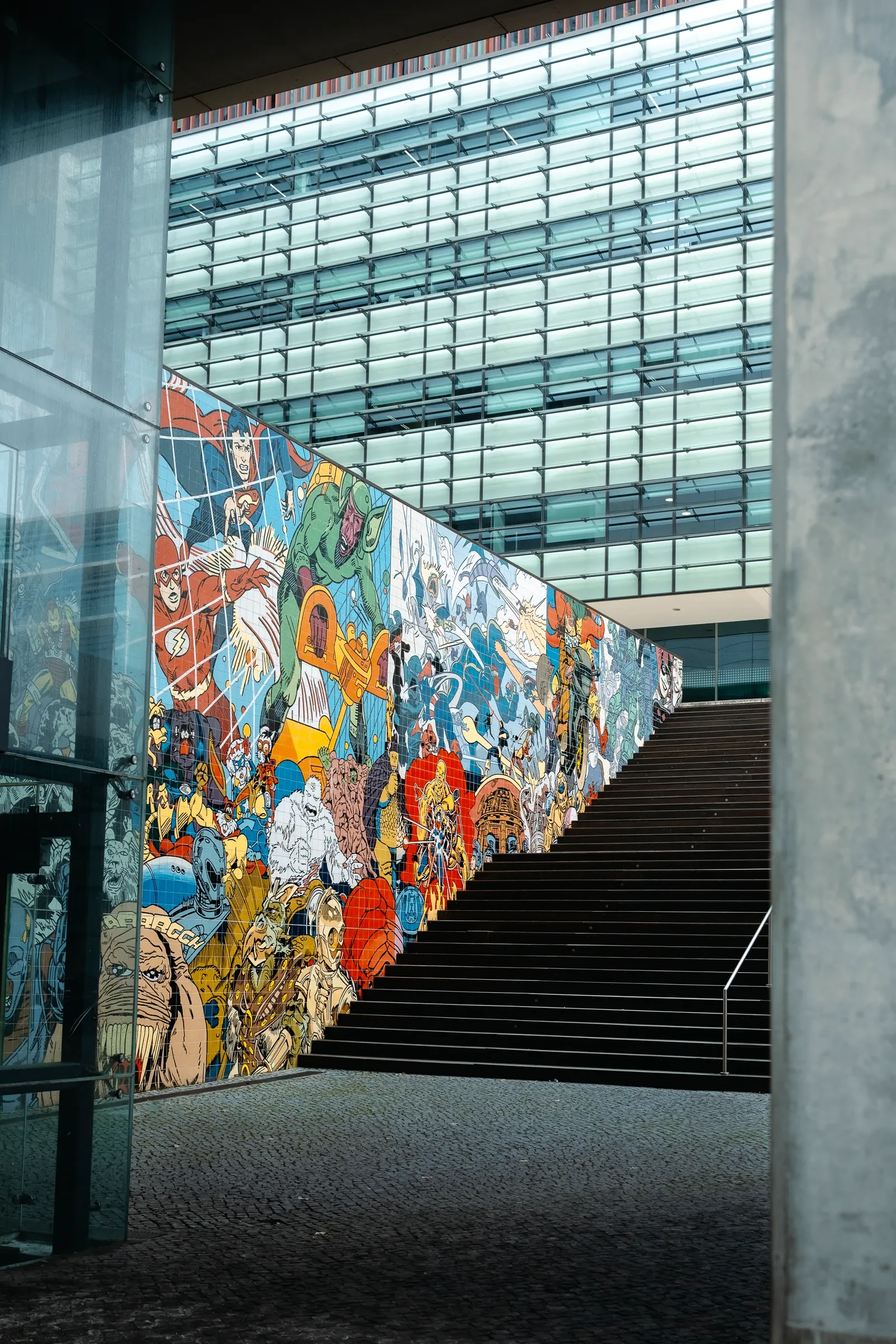
And then there's the other side of the city. LX Factory, an old factory complex under the bridge, full of street art, fire escapes, small shops and restaurants — plus a giant insect made of scrap metal on the wall. The Marvel Art Wall with its tiled wall full of superheroes. The umbrella street near Rossio. And the Igreja de São Domingos, where the traces of the 1959 fire are still on the walls and pillars — one of the few churches where you don't have to read the history, you simply see it. Had enough of hills after all that climbing? At Parque das Nações, the modern part of the city from the Expo era, a cable car runs along the river.
The main locations in this series:
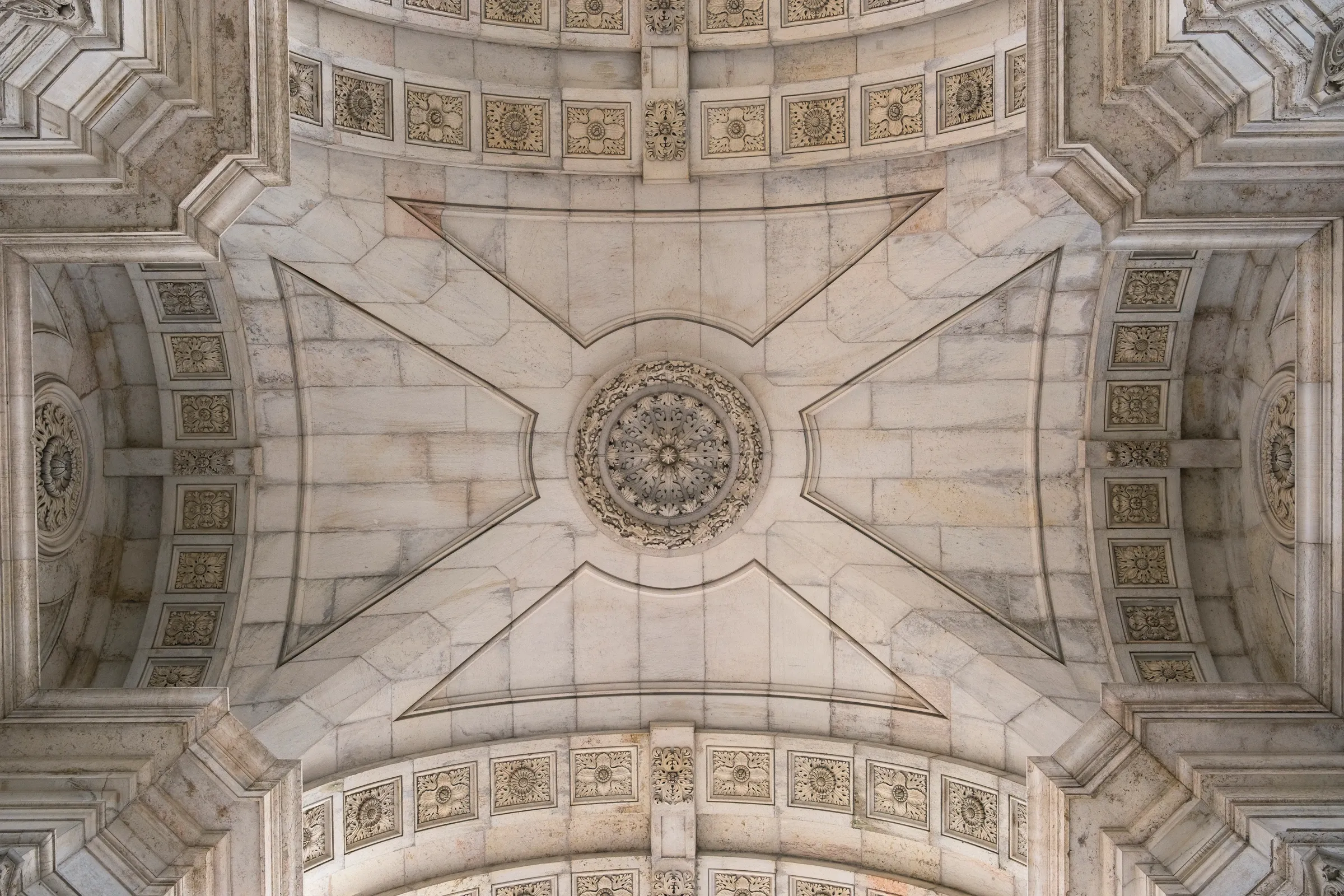
- Praça do Comércio and the Arco da Rua Augusta — walk under the arch and look up while you're there
- Miradouro da Graça, Miradouro de Santa Luzia and Portas do Sol
- Santa Justa lift
- Bica and Glória funiculars
- Tram 28 and tram 12, at their best in the early evening
- Alfama, Castelo de São Jorge and the cathedral
- Cais das Colunas at sunset
- Pilar 7 on the Ponte 25 de Abril
- LX Factory and the Marvel Art Wall
- Igreja de São Domingos and the Carmo convent
- Belém: Mosteiro dos Jerónimos and Torre de Belém
- M'arrecreo for pizza, Pink Street for the evening
Next time we'll set an alarm.